
FILM WEDDING PHOTOGRAPHY
why I shoot weddings on film
Film wedding photography is becoming more and more common for a reason. Film's texture (that gives it an almost tridimensional feel), film's colors that digital filters just can't replicate. Film's “magic". Film's nostalgia.
More than anything, though, I believe what has been attracting more and more people to film is its simplicity. In a world of excess and noise, film makes a statement by being consistently beautiful without a fuss. It brings us back to the real reason we used to want to take photographs: a deeply rooted and ever alive admiration for the world around us, and a very human desire to record it, to make it last.
While deciding between having your wedding photographed on film or digital comes down to personal preference, I know a lot of people who love film but are still on the fence for fear of the unknown, so I wrote this page with reasons why I choose, as a wedding photographer, to photograph only on film. I hope this will shed some light on the advantages of film, or simply on what makes it so different and special. If some of the terms here are unfamiliar, you can look them up in my film photography glossary.
An analog process
From a slower pace during the day to potentially receiving less images, a lot changes when you choose to have your wedding photographed only on film. More than just a choice of medium, photographing weddings only on film is a commitment to a completely different creative experience - one where every decision is carefully made and every image is created with intention and purpose.

An intentional approach
Film is slow. From the time it takes to load film into the camera to the fact that you have a maximum of 36 images in each roll (or less than 15 if shooting medium format), photographing on film involves a lot of decision-making ahead of time. You can't really take 20 images of a scene and just hope that one of them will turn out well. In fact, film doesn't allow you to rely solely on luck. All these factors make shooting film a slow, intentional process. On the other hand, it also makes the process less intrusive. In general, my approach is always to observe, measure light, take the shot and then retreat. The results are images that don't look forced, people that don't feel uncomfortable, and work that looks spontaneous and authentic. A win-win situation.
Film leaves room for silence
Today's world is loud. Busy. Difficult to inhabit in a quiet, contemplative way. Expectations are high and coming from all directions, attention spans are way shorter than they should be, and information reaches us at volumes we can't process, leaving us feeling overwhelmed and numb.
Film is from another age - an age where processes were slow and intentional and any artistic practice required expertise, concentration and, most importantly, time. Film cameras oblige you to go slowly and to focus on the world in front of you. They invite you to observe. By not showing immediate results, film takes away most of the pressure and expectation and allows for more candid, natural results. Couples and guests feel less self-conscious and find it easier to be in the moment. Images feel spontaneous instead of orchestrated. Without the extra noise interfering with the day, there's much more room for everyone to focus on their own emotions. While I am by no means invisible when photographing weddings, film allows me to be discreet and to blend in with slowness and grace.
A Film photograph is “a photograph”
A photographer friend of mine once told me that, and I understood what she meant immediately. This feeling is probably familiar to anyone born before the digital age. Photographs used to be physical, tangible things. Each of them had its own individual value, its own physical weight. Each occupied its own space within our photo albums, shoeboxes, archives. We knew our favourites by heart and flipped through them frequently. A “photograph” is an entity, a part of our memory that leaves outside our bodies and within the physical world we occupy. A film photograph certainly feels like that, even when we see it as a scan - something that can stand on its own, and that can hold all there is to be said on its own as well.

Film photography feels surprising
I still remember a time when the world felt like a mystery. Learning about a distant country meant opening the Atlas or an encyclopaedia (preferably on the floor). The information there was limited, so we had to fill all the blanks with imagination. When visiting a place for the first time, everything felt genuinely new and exciting because we hadn't seen thousands of images of it on social media beforehand.
The internet gave us a lot of great things, but it also took away some of the element of surprise that we as humans so desperately need to keep our sense of wonder alive. That's where the magic of film lays: it still feels like a mystery. For most of the process of creating a film photograph, we are quite literally in the dark. With film wedding photography, we need to wait weeks before the final image is ready to be seen, and there's no way to know exactly how it'll turn out. No matter how accurately we predict it, film will still surprise us in the most incredible, humbling, transformative ways - like any art should.
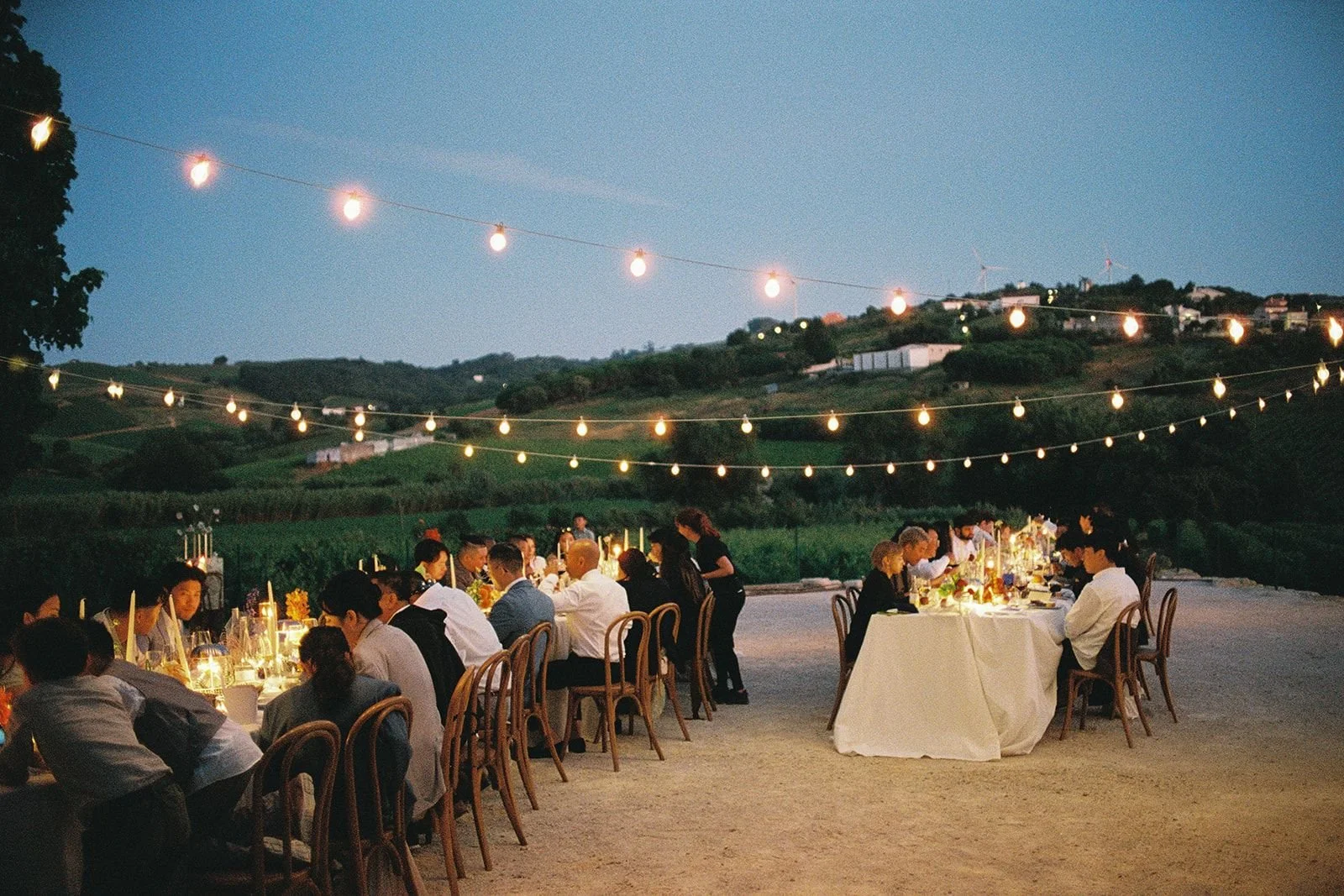
With a maximum of 36 images per roll, photographing on film means I take each image more seriously. The work becomes intentional. Less time is spent looking through the viewfinder and more time is dedicated to observing my surroundings and contemplating what happens around me - less time worrying about the images I think I should be making, and more time recognising and learning from the moments that are already happening. This gives me a much wider view and a better notion of context, dynamics, opportunity. I let the wedding guide me, and not the other way around.
A wedding is not the type of experience you repeat every 5 or 10 years. You can't really retake those shots when the ones you already have suddenly look outdated. As a film wedding photographer, I believe that images are meant to be a way to communicate present emotions to our future selves (and future generations). They need to be able to age well. And film does that - and has been doing that, for longer than we've been alive.
Film is a limited resource
Film wedding photography and an analog heritage
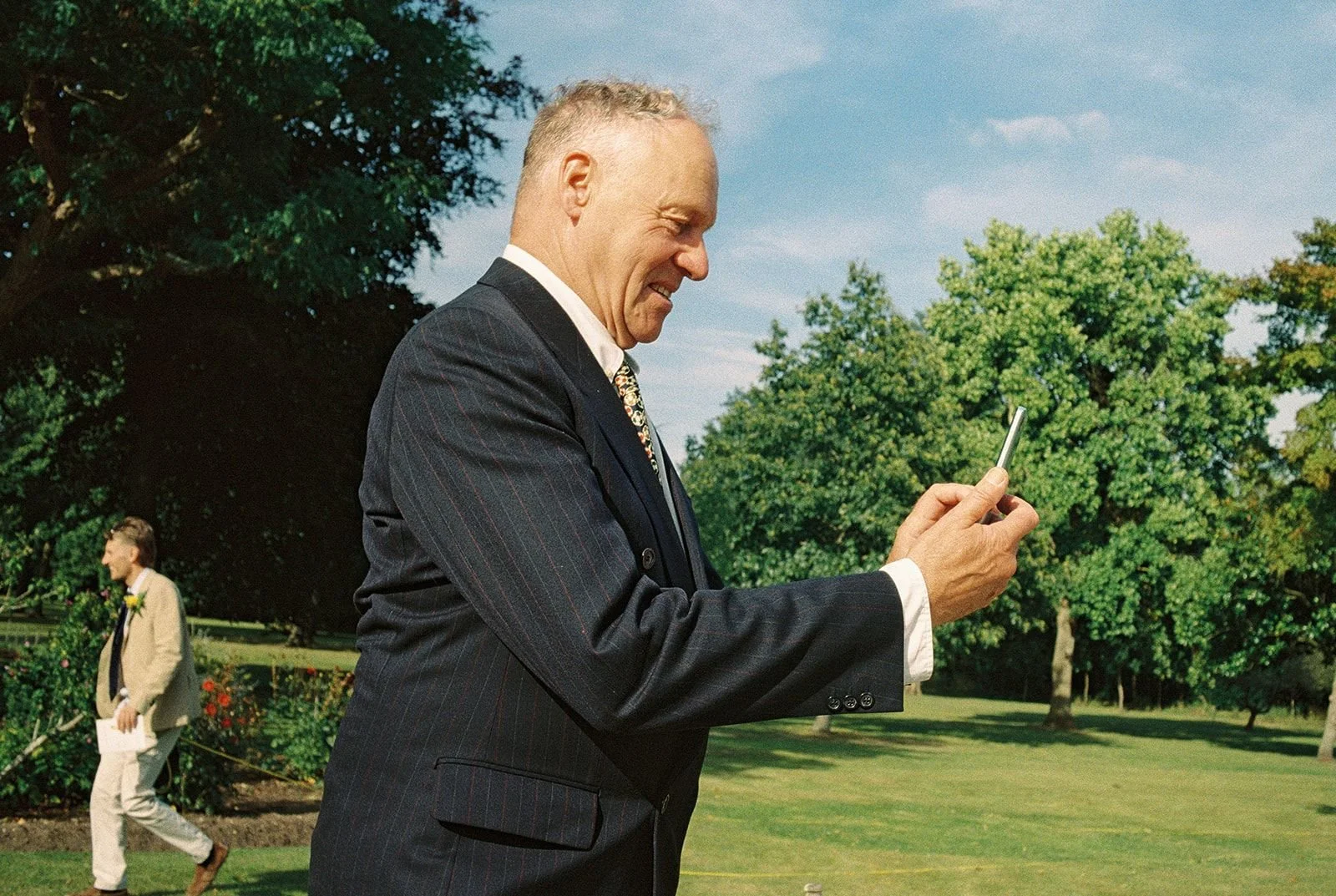
During the almost 20 years I've been a photographer, I've seen my fair share of trends come and go in the wedding photography industry, from sepia filters to blurry lens effects. The common element with all these trends is that none of them look good now. In fact, they look terrible, and most people I know who have had images taken around one of those periods barely look at their photos now, let alone hang them on their walls.
Now look at an old Kodachrome slide or a simple black and white portrait taken during your family's yearly trip to the beach in the 80's, and you feel as enchanted as you did 40 years ago. Images don't need a lot to be beautiful. They just need to be good at representing the real world, because that's beautiful enough already. Film understands that, and has understood that for the past century (with just a few weird periods in film wedding photography around the 70s and 80s, but let's not talk about that).
Film photographs age beautifully
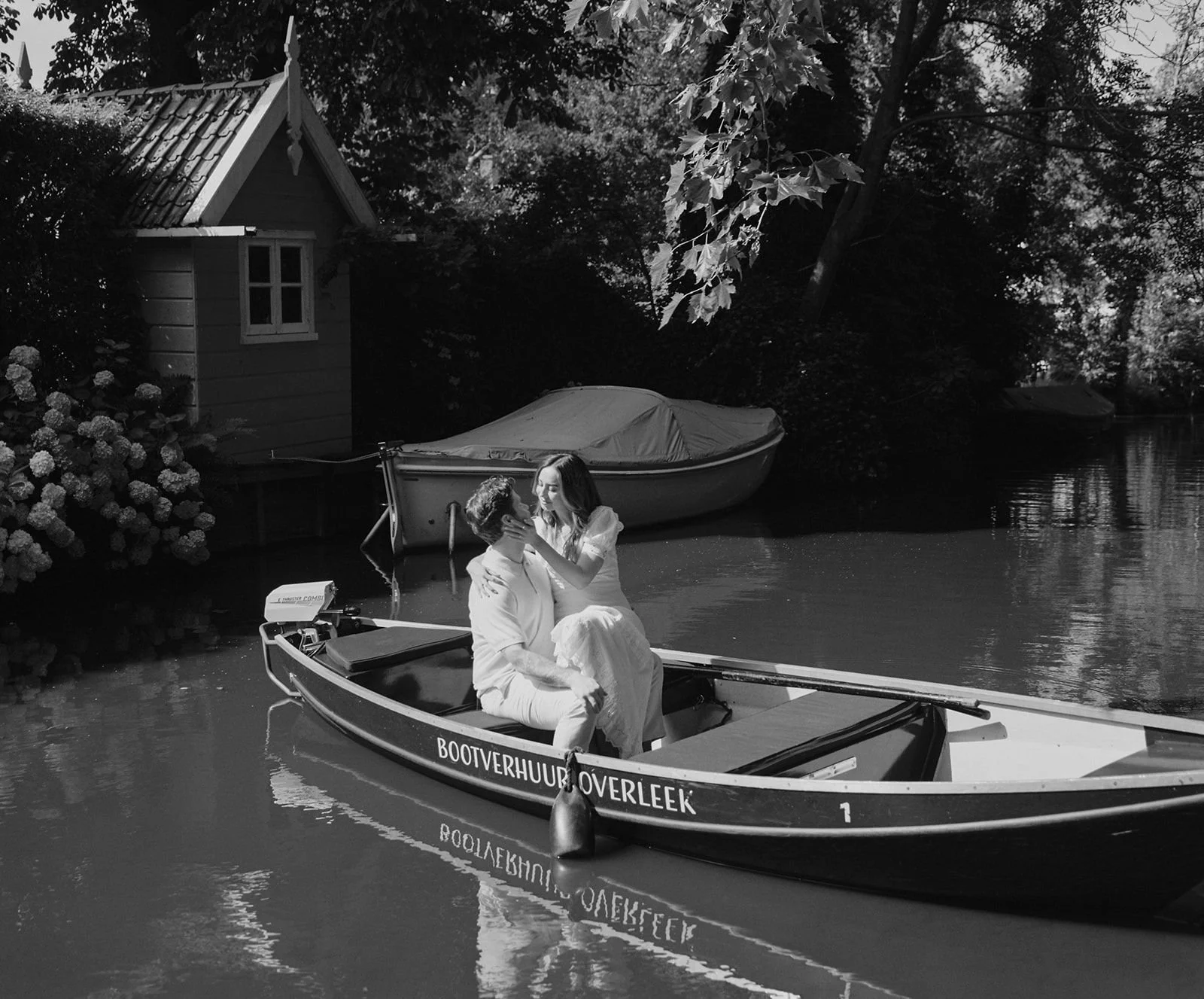
Film gives a sense of continuity.
Everyone from the 80's and 90's probably shares this feeling of rupture in their memories that falls around the birth of digital cameras . In my case, the split happened around my twelfth birthday. Digital cameras were especially bad at that time and we were all especially inexperienced in safeguarding digital files, so I barely have photographs of my teenage years. For some people the split was less evident, but even then their live's photographs are divided into two subcategories: the digital photos from the past 2 decades or so, and the film photos from before. The thing is, the film photos follow a single line: from ourselves to our parents and grandparents, a continuum of memories that evolve smoothly from one generation to the next. You can still spot differences in film quality, camera quality, the advent of the 35mm cameras, but it all feels like part of the same archive, the same history. An analog heritage.
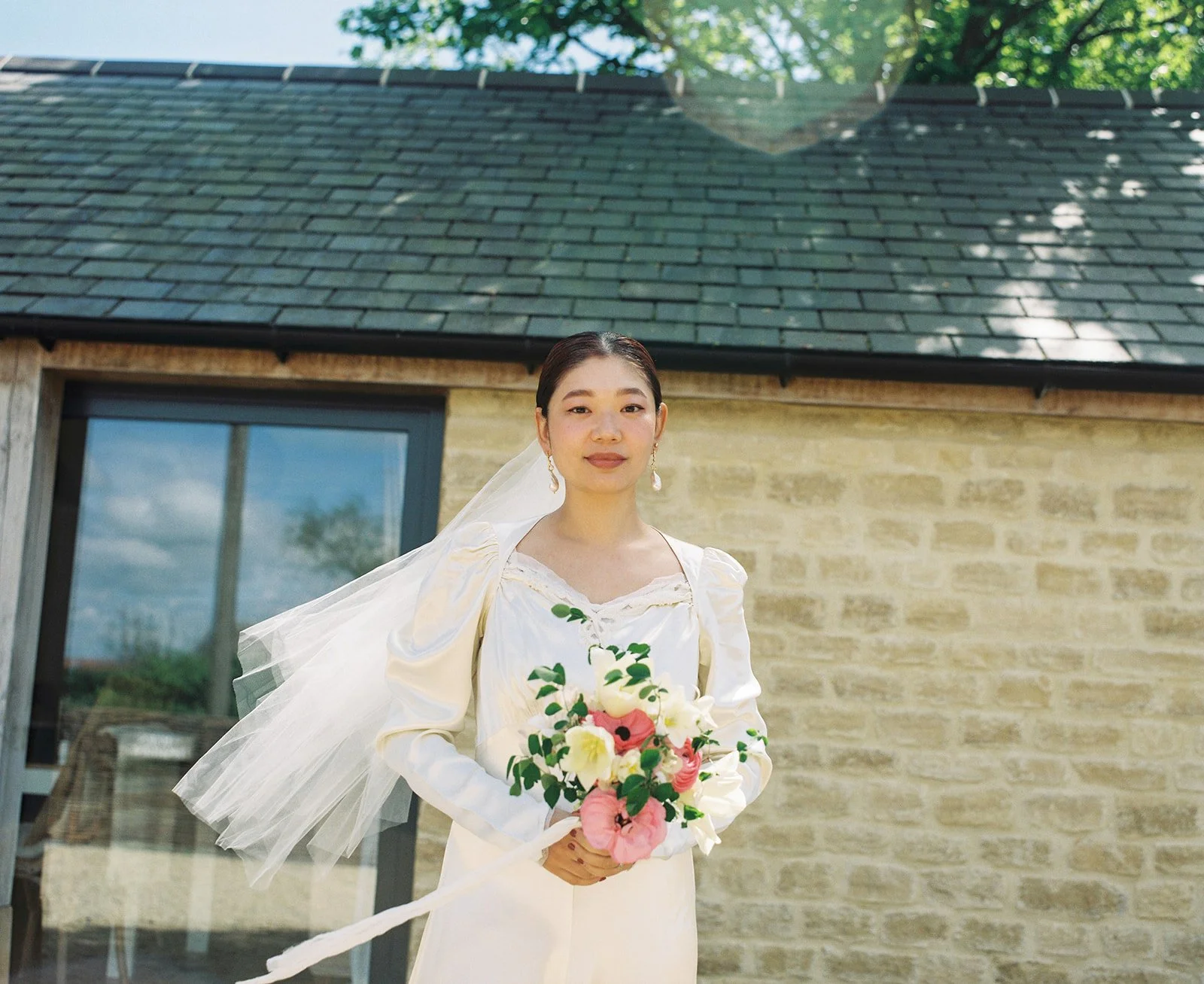
Film photographs are made to last
If stored in a freezing environment, negatives could last up to a thousand years. Under most storage conditions (like your home or mine, for example) that number jumps down to 50 years, but that is still a lot if you consider it's just the negative, which should work as a “backup” for when you lose your scans or prints for any reason or if you want to print or scan them again. A properly processed darkroom print can last over a hundred years, which can be easily confirmed by the images of your grandparents and great-grandparents as teenagers - still in great condition, even with all the dirty fingers we used to rub over them.

Frequently Asked Questions
-
While there is nothing that film can't photograph, film cameras and digital cameras operate in wildly different ways, so it's very important to have the right expectations when working with film or having your wedding photographed on film. For example, while modern digital cameras tend to have a sensitivity to light that goes above the tens of thousands , the highest film sensitivity is just 3200 (and that is only available on black and white). This is something that can easily be fixed with the use of flash, but it is important to understand those differences when planning a wedding, especially when you don't like the look of flash or don't want your whole wedding to be photographed with flash (or when you don't want the flash to be triggered all the time during your ceremony, for example). On the other hand, film handles a high-contrast situation (like midday sun) way better than digital cameras. Film needs light. More than that: film thrives on light. But so do humans, so I think we're a perfect match.
-
Photographing exclusively on film doesn't necessarily mean delivering less photos, but I do choose to deliver less images than most digital photographs would do nowadays, mostly because I find the number of delivered images to be astronomical without any creative reason to support it. I make a conscious choice to focus on quality over quantity and to carefully select which moments should be photographed and how. When a good moment shows itself, I focus on taking just a few great images from it instead of multiple good images. I think numbers do matter when we are seeing photographs, and I don't want to overwhelm my couples with thousands of images that they can never find time to look at. Film is also expensive, so focusing on photographing with purpose means I can keep the final costs down and my prices still affordable.
I deliver 400-500 images on a typical wedding day, and I find that number to be perfect: enough images to tell the story of the day, but not too many that they lose meaning. -
Technically there are more things that can go wrong with film because results are only seen long after the moment is gone and because film is light sensitive up to the moment it's developed. But I think of this more as an extra challenge: film isn't inherently riskier than digital, it's just harder to do well and requires a few extra layers of care (which is also part of the beauty of it). Film photographs are made through a chemical process: the same amount of light will always impact the same type of negative in the same way. Learning how to measure light and understand light (and your cameras) so that you can always predict your results as accurately as possible is the biggest part of learning how to shoot film. Once the roll is finished, there comes a second chemical process to turn the film into a negative, and then a digital process to turn the negative into digital scans. In my case, this final process is done by the best film lab in Europe. Once all those variables are under control and other small measures are in place to account for the fact that technical issues (a light leak, for example) can't be spotted right away, photographing exclusively on film becomes a very safe option and the question of film vs digital comes down to creative choices only. Part of the extra care that needs to be taken with film has to do with keeping it safe before development, which includes keeping it safe when travelling, keeping it refrigerated and choosing a good lab to develop it
-
Not really. Even though the process of developing and scanning film takes time and a digital image technically already exists on the day of the wedding, I find that most digital photographers take way longer than I do to deliver galleries. I aim to deliver final wedding galleries in 5 weeks, which is considered a fast delivery time in the industry.
-
Yes! All weddings are delivered as galleries containing high-res jpg files, with the option to add prints and albums as well.
-
No, the negatives stay with me and are archived in an acid-free environment to guarantee they remain damage-free for many decades in case you decide you want a darkroom print at some point down the line.